The Best Paint Colors for a Home Office in DFW: Focus, Energy, and How North Texas Light Changes Everything

The home office has become one of the most consequential rooms in a Dallas-Fort Worth home, and for a growing number of Plano, Frisco, Richardson, Allen, and McKinney residents, it's also one of the most permanent. What began as a temporary arrangement for many families has settled into a long-term reality — a dedicated room where productivity, focus, and mental clarity need to show up reliably every workday. Most homeowners who set up a home office invest considerable thought in the desk, the monitor setup, the chair, and the lighting fixture.
Very few invest the same deliberate attention in the paint color on the walls surrounding all of that equipment, even though color is one of the most potent and least expensive environmental variables affecting cognitive performance and mood in any workspace. In a region where North Texas sunlight pours through windows with an intensity and angle unlike almost anywhere else in the country, getting that color decision right requires understanding both the neuroscience of color and the specific optical behavior of DFW's light — because a color that promotes focus beautifully in a Seattle office can produce fatigue, glare, or an atmosphere of restless anxiety in a south-facing Plano study.
Why Color Affects Cognitive Performance — and Why It's Not Just Preference
Color preference and color performance are two entirely different things, and confusing them is the most common mistake homeowners make when choosing a home office paint color. You might personally prefer warm, rich tones — deep burgundies, saturated golds, warm chocolates — and those colors may make you feel comfortable and at ease in a living room or bedroom. But comfort and cognitive performance are not the same neurological state, and paint colors that promote relaxation actively work against the alertness, sustained attention, and working memory performance that a productive workday demands.
The research on color and cognition has become substantially more refined over the past two decades. Studies in environmental psychology have established that mid-value blues and blue-greens consistently support sustained attention tasks — the kind of deep focused work that characterizes knowledge work, writing, analysis, and design. Soft, desaturated greens support accuracy and careful, methodical work, partly because green sits at the center of the human visual spectrum and requires the least muscular adjustment from the eye to bring into focus, reducing the subtle visual fatigue that accumulates over a full workday.
Warmer tones in the yellow-orange family stimulate creative and generative thinking — brainstorming, ideation, lateral problem-solving — but at higher saturation they also elevate cortisol and increase the likelihood of distraction and restlessness. Highly saturated versions of any color, including bold reds, vivid yellows, and intense greens, produce stimulation levels that are counterproductive for sustained focus regardless of the specific hue.
What this means practically for a DFW homeowner designing a home office is that the most productive color palette is almost never the most visually dramatic one. The colors that perform best cognitively tend to be mid-value, slightly desaturated versions of blue, blue-green, soft green, or warm neutral — colors that feel deliberate and refined rather than bold and expressive.
How Light Rewrites the Rules
Understanding color science is the necessary foundation for a home office color decision in the Dallas-Fort Worth area, but applying that science without accounting for DFW's specific light conditions will still lead you astray. North Texas sits at a latitude and in an atmospheric environment that produces natural light with characteristics meaningfully different from the coastal, northern, or Pacific environments where much of the color guidance homeowners encounter online was developed.
DFW receives an average of 234 sunny days per year, with a sun angle and intensity that produces light with a strong warm-yellow to neutral color temperature for most of the day. This is significantly different from the cool, blue-shifted diffuse light characteristic of the Pacific Northwest or the Northeast, where the same paint colors are photographed for the shelter magazines and websites that most homeowners use for color inspiration.
A soft blue that looks sophisticated and calming in a Portland home office — where cool, diffuse light maintains the color's cool undertone throughout the day — can look distinctly purple-gray or lavender in a DFW home office where the warm North Texas sunlight shifts the color's perceived undertone toward its violet component. A warm greige that looks grounded and neutral in a north-facing New England room can read orange or pink in a south-facing Frisco office where intense afternoon sun amplifies every warm undertone in the paint.
The practical implication is that color decisions for a DFW home office must be made by testing samples on the actual walls of the actual room, observed at multiple times of day under both natural and artificial light, before committing to full coverage. A two-inch sample card evaluated under fluorescent store lighting will not tell you what that color does in your specific office at 3 p.m. on a summer afternoon when the west-facing window is pouring in full Texas sun.
South- and West-Facing Offices: Managing Intensity Without Losing Atmosphere
In the DFW metroplex, south-facing and west-facing home offices receive the most intense and warmest natural light, and this exposure profile has specific implications for color selection. Warm undertones in paint colors are amplified by warm light — meaning a paint that reads as a balanced warm gray under morning light will shift noticeably toward tan, beige, or even orange by mid-afternoon as the sun's angle intensifies. Colors with strong blue or green undertones fare better on these exposures because the warm light partially neutralizes the cool undertone, producing a balanced, grounded appearance rather than the slightly clinical effect those same colors can develop in less light-intense environments.
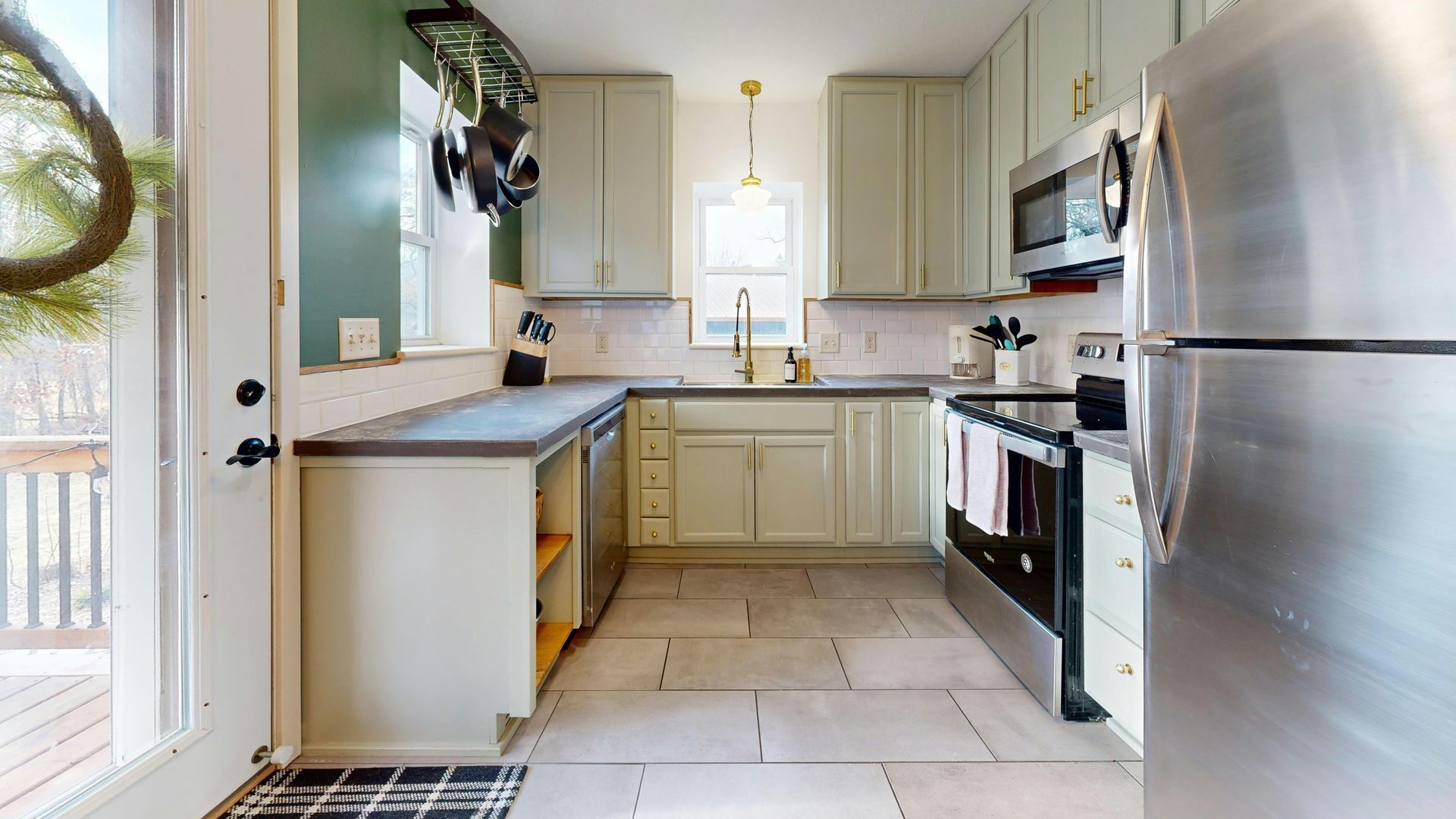
For south- and west-facing offices, consider blue-greens and soft teal-adjacent tones in a mid-to-light value range. Colors in the Benjamin Moore family like Buxton Blue, Sea Salt, or Quiet Moments, or their Sherwin-Williams equivalents in the Reflecting Pool and Quietude family, maintain their integrity through DFW's afternoon light far better than pure cool blues that can shift uncomfortably toward purple. Warm whites with distinctly neutral undertones — avoiding anything with a pronounced yellow or pink cast — work well as accent walls or as the color on a single wall behind a monitor, where their light-reflective properties reduce eye strain without contributing the color fatigue that saturated walls can produce.
North-Facing Offices: Where You Can Be Bolder
North-facing home offices in the DFW area receive indirect, relatively consistent light throughout the day — cooler in quality than south or west exposures, and lower in intensity than any other orientation. This is actually the most forgiving exposure for home office color selection because the cooler, more diffuse light doesn't amplify warm undertones the way direct sun does, giving you more latitude to use warmer tones that would look overpowering in a south-facing room.
A north-facing office in a Plano or McKinney home is one of the few situations where a warm sage green, a soft terracotta-adjacent neutral, or even a rich putty tone can perform beautifully — delivering the warmth and psychological comfort that makes a room feel pleasant to spend a full workday in without the intensity problem those colors create under direct Texas sun. The one pitfall to navigate on north-facing exposures is that truly cool colors — pure blues, cool grays, and blue-greens at low value — can feel cold and slightly dreary in a room that receives no direct sunlight, particularly during DFW's winter months when the sun angle is lower and indirect light is even more subdued. Adding warmth through the paint color compensates for what the light doesn't naturally provide.
The Ceiling and Trim Decisions That Complete the Productivity Environment
Home office color selection often stops at the four walls, but the ceiling and trim colors in a workspace contribute meaningfully to the cognitive environment and deserve deliberate choices rather than defaults. Standard flat white ceilings are appropriate in most home offices, but the specific white matters more than homeowners typically realize. A ceiling white with a pronounced cool undertone in a warm-toned office can feel discordant — the visual contrast between a warm wall and a blue-white ceiling creates a tension that registers as subtle discomfort even when you can't identify its source. Matching the ceiling white's undertone to the dominant undertone of the wall color — warm-white ceiling with warm walls, neutral-white ceiling with cool or neutral walls — produces a cohesive environment where every surface works in the same tonal direction.
Trim color in a home office has a functional dimension beyond aesthetics. Bright, pure white trim against a mid-value wall color creates high contrast that makes the room's architectural edges visually sharp and stimulating. In a bedroom or living room, this contrast reads as clean and classic. In a workspace where you'll spend hours each day, that edge contrast contributes to visual fatigue in ways that are subtle but cumulative. A trim color that's a step or two warmer or softer than bright white — a linen, an antique white, or a warm off-white — reduces that edge contrast while maintaining the visual differentiation between wall and trim that gives a room its sense of finish and detail.
The One-Color-Plus-Accent Framework for DFW Home Offices
The most consistently successful approach for home office color in the DFW area is a framework that treats the room's dominant wall color as a single, carefully chosen mid-value tone and uses one accent wall — typically the wall behind the primary seating position or the wall opposite the main desk — as an opportunity for slightly more visual interest or depth. This accent can be a slightly deeper value of the dominant color, a complementary tone that shares the same undertone family, or a textured treatment like board and batten or shiplap painted in a contrasting but coordinated shade.
What this framework avoids is the all-four-walls-in-the-same-saturated-color mistake that produces an immersive color experience appropriate for a restaurant or retail environment but overwhelming for eight-hour work sessions. Color at full saturation on all four walls of a home office creates a phenomenon called color fatigue — the visual system adapts to the dominant hue, and after extended exposure, attention and focus performance measurably decline. Reducing saturation, limiting the deepest color to a single wall, and using the remaining three walls in a lighter value of the same hue or a complementary neutral gives the visual system relief while maintaining the character and atmosphere that makes a dedicated office feel like a considered, intentional space.
Let Hutch'N'Son Help You Create a Workspace That Works as Hard as You Do
The right color in a home office isn't just aesthetically pleasing — it actively supports the focus, energy, and sustained attention that productive work demands. If you're ready to transform your home office in Plano, Frisco, Richardson, Allen, McKinney, or anywhere across the greater Dallas-Fort Worth area with colors and products selected specifically for North Texas light and your room's unique exposure, Hutch'N'Son Painting is ready to help. Our team brings over 40 years of experience working with DFW's demanding light conditions, and we'll walk you through color testing, sheen selection, and product choices that deliver a workspace that performs beautifully from the first morning light to the last evening hour. Contact us today to schedule your free estimate.