What Is the Correct Order to Paint a Room? Ceiling, Walls, or Trim First?

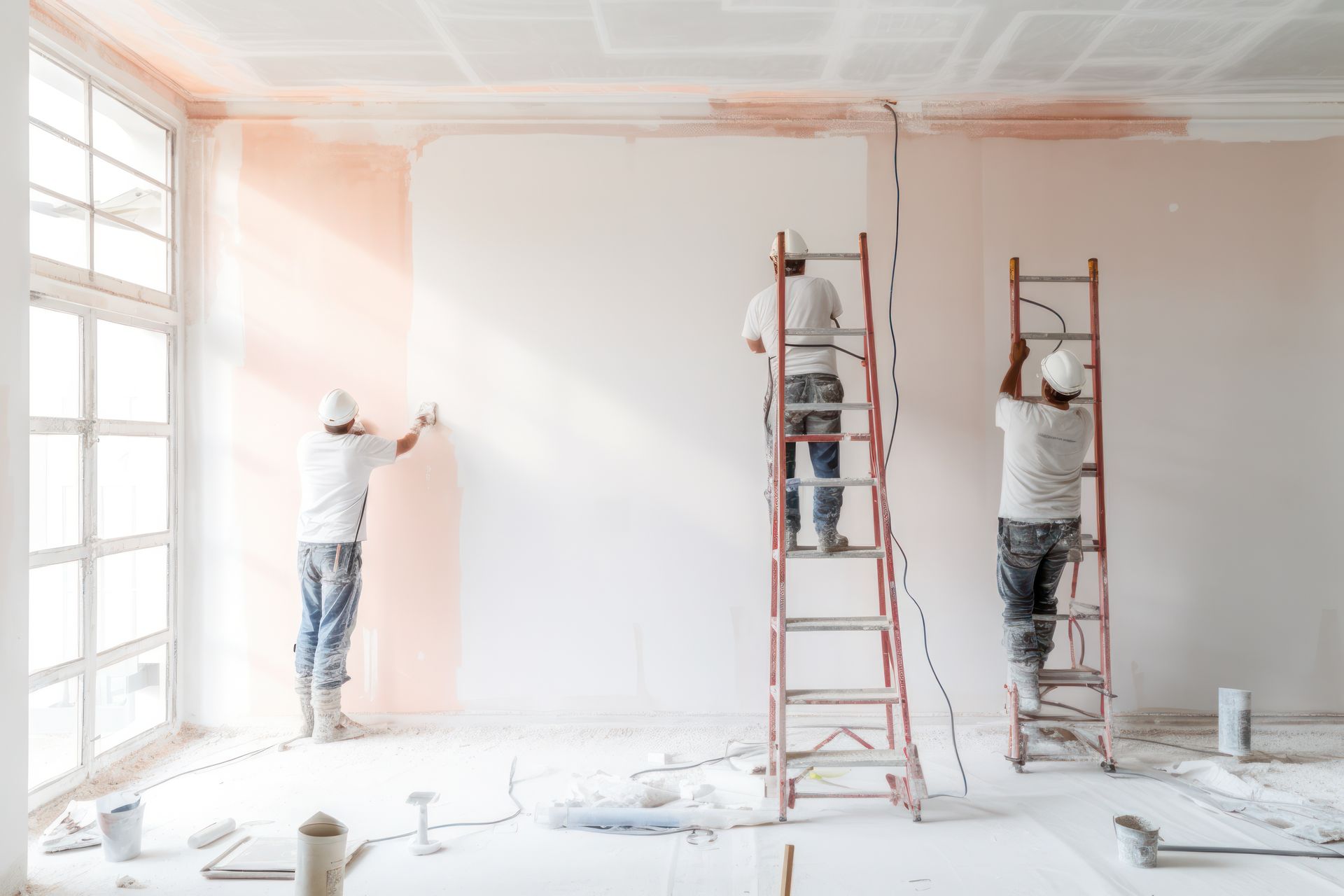
It seems like a straightforward question until you're standing in a freshly prepped room holding a brush and realizing you have four different surfaces that all need paint, no clear starting point, and a genuine concern about messing up the work you've already done. The order in which you paint a room is one of those decisions that feels arbitrary until you get it wrong — and then it becomes immediately, frustratingly obvious why sequence matters. Homeowners throughout Plano, Frisco, Richardson, Allen, McKinney, and the greater Dallas-Fort Worth area contact us regularly after DIY interior paint projects that produced decent color but left them with trim paint on freshly rolled walls, ceiling edges bleeding into wall colors, and touch-up work that multiplied with every fix. Almost every one of those situations traces back to painting in the wrong order. The correct sequence isn't complicated, but it requires understanding the logic behind it rather than just following a checklist — because once you understand why the steps fall where they do, you can adapt intelligently to whatever your specific room presents.
The Foundational Principle: Work From the Top Down and From Rough to Refined
Every decision in the professional painting sequence flows from two principles that work together. The first is gravitational: paint drips, spatters, and roller spray travel downward. If you paint surfaces from top to bottom, every step you take deposits any overspray and drips onto surfaces you haven't painted yet, which means those mistakes get covered automatically by subsequent work rather than landing on surfaces you've already finished. The second principle is about surface refinement: paint the surfaces that can tolerate some overspray from adjacent work before painting the surfaces that require precision. Ceilings can accept a small amount of wall paint at their edges because that edge gets covered when you paint the wall. Walls can accept a small amount of trim drip at the baseboard because the baseboard paint covers that contact line. The sequence is self-correcting when you follow it in the right direction — and self-defeating when you reverse it. These two principles collapse into a single rule that professional painters throughout the DFW area have followed for decades: ceiling first, walls second, trim last. Every variation and nuance in the process descends from that structure.
Before Any Paint Opens: The Prep Phase That Determines Everything
The sequence doesn't begin with paint. It begins with preparation, and preparation done correctly across all surfaces before a single can is opened is dramatically more efficient than prepping each surface just before you paint it. Walk the entire room and address every repair — nail holes, drywall dings, hairline cracks at corners, tape seams that have lifted — across the ceiling, all walls, and all trim in a single pass. Sand those repairs smooth. In North Texas homes, particularly the older ranch-style properties in Plano and Richardson that have accumulated decades of paint layers, pay attention to ridges at the edges of old patches that have built up over multiple repaints. Those ridges telegraph through new coats as visible lines under raking light, and they need to be feathered flat before painting begins.
Clean all surfaces with a degreasing solution before painting, especially in rooms adjacent to kitchens or in older DFW homes where years of HVAC cycling has deposited a fine layer of dust and airborne cooking residue on walls that may not look dirty but will prevent proper adhesion at a microscopic level. Tape off window glass, door hardware, and any surfaces that need protecting from overspray, and remove outlet and switch plate covers entirely rather than cutting around them — the result is always cleaner, and the time savings from not correcting paint on cover plates exceeds the time spent removing them.
Priming Strategically: Not Everything Needs It, But Some Things Desperately Do
Primer belongs in the sequence after prep and before paint, but the mistake many homeowners make is treating it as a uniform first coat for every surface in the room regardless of that surface's actual condition. Strategic priming means applying it specifically where the substrate requires it — over patched and repaired areas where joint compound creates a different absorption rate than the surrounding painted surface, over stains from water damage or smoke that will bleed through any number of finish coats without a proper stain-blocking barrier, over surfaces being painted dramatically lighter after years of a darker color, and over any bare drywall or unfinished wood exposed during repairs.
In the Dallas-Fort Worth climate, water stains deserve particular attention during the priming phase. DFW homes experience periodic roof damage from hail storms and heavy rain events, and the resulting ceiling and wall stains are among the most common surface problems we encounter. Standard latex primer will not reliably block water stains — it takes a shellac-based or oil-based stain blocker to chemically seal those mineral deposits before finish coats go on. Applying standard primer over a water stain and then covering it with two coats of ceiling white produces a stain that reappears within weeks as the water-soluble compounds migrate upward through the wet finish coat. This is one of the most preventable paint failures in residential work, and catching it at the priming stage rather than discovering it after the room is complete saves significant time and material cost.
Step One: The Ceiling First, Always — Here Is the Exact Reasoning
With prep and priming complete, the ceiling receives the first coat of finish paint. The reasoning is simple and absolute: rolling a ceiling generates fine mist and occasional drips that fall downward onto the walls below. If the walls are already painted, that overspray is a problem requiring cleanup and touch-up that introduces sheen variation at every corrected point. If the walls haven't been painted yet, the overspray is irrelevant — it gets covered when the walls are rolled. Ceiling paint is invariably a flat or matte finish that hides roller stipple and minor surface texture, and it should be applied in two directions with overlapping passes to ensure uniform coverage without banding.
Cut in at the ceiling perimeter with a brush before rolling — running a band of paint two to three inches out from the ceiling-wall junction — but don't agonize over perfect precision at that junction during this step. Small amounts of ceiling paint that drift onto the upper wall surface will disappear entirely when the wall color is applied. The goal at the ceiling stage is complete, even coverage on the ceiling plane itself, not an exhibition-quality perimeter cut line.
One DFW-specific note: in Texas homes with tall ceilings — the vaulted great rooms and two-story entries common in Frisco, Allen, and McKinney's newer subdivisions — ceiling work requires extension poles and sometimes scaffolding for sections above standard reach. The physics of painting at extended heights changes how much roller pressure you can apply and how paint distributes across the surface. Work in smaller sections and maintain consistent pressure throughout each pass to avoid banding that becomes visible under the broad light distributions these large ceiling planes receive.
Step Two: Walls — Technique That Eliminates the Most Common Problems
After the ceiling is complete and dry, the walls receive their first coat. Cut in at the ceiling line, in the vertical corners where walls meet, and along the top edge of the baseboard and door and window casings — but keep your cut-in band relatively narrow, two to three inches, rather than trying to cut in the entire wall height with a brush. A wide cut-in band dries before you can roll back into it, creating a visible seam where brush-applied paint meets roller-applied paint with a slight sheen and texture difference that shows under raking light. In Texas, where summer air conditioning keeps interior humidity relatively low and accelerates latex drying, this cut-in-to-roller timing becomes even more critical than it is in humid climates — move promptly from cut-in to rolling each section rather than cutting in the entire room before picking up the roller.
Roll walls from ceiling to floor in overlapping passes using a consistent nap roller appropriate to your wall texture. North Texas homes frequently feature orange peel, knockdown, or light skip trowel texture on drywall, and these textured surfaces require a slightly thicker nap — typically three-eighths to one-half inch — to deposit paint into the texture valleys without leaving peaks unpainted that show as a speckled pattern on the finished wall. Two coats are standard for most wall applications, and assessing coverage between coats should always be done on fully dry paint rather than wet paint, which reads thinner and more transparent than it will once cured.
Step Three: Trim Last — The Decision That Changes Everything About Touch-Up Work
Painting trim last is the step that most separates professional results from amateur ones, and it is consistently the step most homeowners reverse out of intuition. The instinct is to paint the crisp white trim lines first and then fill in the wall color carefully around them. The professional approach is exactly backward, for a reason that becomes clear the moment you think about the physics of brushwork on narrow surfaces.
Applying paint to baseboards, door casings, window casings, and crown molding requires brush pressure at edges that inevitably pushes small amounts of trim paint onto the adjacent wall surface. If the wall is already painted and that semi-gloss trim paint lands on your eggshell finish, you have a sheen discrepancy at that contact point that is visible under the directional light that North Texas afternoons pour through south and west-facing windows. Correcting it requires careful touch-up that introduces its own subtle sheen variation. If you paint trim last and the same contact occurs — a small amount of semi-gloss landing on the wall adjacent to a baseboard — you simply touch that point with a small amount of wall paint on a brush or small roller once the trim has dried, and the eggshell correction blends invisibly into the surrounding wall. The math strongly favors trim last every time.
Within trim, follow the top-to-bottom rule internally: crown molding first if present, then door and window casings, then baseboards. Any drips from crown work fall onto casings and baseboards that haven't been painted yet; any drips from casings fall onto baseboards below them. The sequence is self-cleaning at every level.
The Often-Overlooked Final Step: Doors
Interior doors, if being painted in the same project, follow the trim sequence and come last. Remove all hardware before painting — hinges, knobs, and strike plates — rather than attempting to cut around them. Paint door faces in thin, even coats using the same waterborne alkyd or premium trim enamel used on the rest of the trim for a consistent sheen match throughout the room. Prop doors open during drying and for at least 24 hours after the final coat to prevent the freshly painted surfaces from bonding together at the door-to-frame contact points, which is an easy problem to avoid and a frustrating one to repair after the fact.
Dry Time Versus Cure Time: The 30-Day Reality Every Homeowner Should Know
Paint is dry to the touch within one to four hours. It is fully cured — meaning the film has reached maximum hardness and chemical resistance — in approximately 30 days. During those 30 days, scrubbing, aggressive cleaning, or placing furniture in contact with painted surfaces risks marring the finish because the film is still hardening. This matters most for trim, where baseboards and casings are most likely to receive accidental contact from moved furniture, door hardware being reinstalled, or cleaning during the settling-in period after a paint project. Treating fresh paint surfaces gently for the first month protects the quality of the work just as much as the sequence used to apply it.
Let Hutch'N'Son Get It Right the First Time
A paint job that follows the right sequence from prep through final coat produces results that last, look clean from every angle, and don't require the endless round of touch-ups that out-of-sequence work generates. If you're ready to have a room — or an entire home — painted in Plano, Frisco, Richardson, Allen, McKinney, or anywhere across the greater Dallas-Fort Worth area with the precision and experience that over 40 years in North Texas homes delivers, Hutch'N'Son Painting is ready to help. We bring the product knowledge, the preparation discipline, and the sequencing expertise that turns a painting project into a finished result you're genuinely proud of. Contact us today to schedule your free estimate and let us get it done right the first time.