Kitchen Wall Paint That Can Handle the Heat: Product Selection for Behind Stoves, Sinks, and High-Splash Zones

Your kitchen asks more of its paint than any other room in your home, and it's not particularly close. The walls behind your stove endure cooking grease that aerosolizes at temperatures exceeding 350 degrees and settles as a sticky film that bonds to paint surfaces at a molecular level. The backsplash area around your sink absorbs repeated water splashes carrying soap residue and food particles that test adhesion and stain resistance dozens of times daily. Even the walls flanking your cooktop face steam exposure that would cause paint in a bedroom to fail within months. Despite these punishing conditions, many Dallas-Fort Worth homeowners paint their kitchens with the same products they use in hallways and living rooms, then wonder why the finish behind the stove yellows, the paint around the sink peels at the edges, and the walls near the dishwasher develop a hazy, grimy film no amount of scrubbing fully removes. Choosing the right paint system for kitchen high-impact zones isn't about spending more — it's about spending differently, and understanding exactly what each area of your kitchen demands from the coating protecting it.
Why Standard Interior Paint Fails in Kitchen Environments
The failure mechanisms in kitchens differ fundamentally from normal interior wear. Standard interior paints in flat or eggshell sheens use binder systems optimized for appearance rather than chemical and thermal resistance, and their relatively porous film structure absorbs airborne grease rather than allowing it to be wiped clean. Once cooking oils penetrate the paint film — which happens microscopically long before you notice visible discoloration — they oxidize and polymerize within the coating, creating a permanent yellowish tint that cannot be cleaned because the contamination exists inside the paint rather than on its surface. This grease penetration accelerates dramatically with heat, which is why yellowing concentrates on the wall directly behind your stove where radiant heat keeps the paint film permeable during cooking. Water exposure creates a different failure pattern, repeatedly swelling the paint film during splash events and contracting as it dries, gradually fracturing the binder matrix and creating micro-cracks that allow moisture to reach the drywall beneath.
The Sheen Question: Why Semi-Gloss Isn't Always the Answer
Conventional wisdom tells homeowners to use semi-gloss paint in kitchens because its harder film surface resists moisture and cleans more easily. This advice isn't wrong, but it oversimplifies a decision involving meaningful tradeoffs. Semi-gloss sheens reflect light aggressively, which in the tight quarters of most DFW kitchens — particularly galley layouts common in Plano's established neighborhoods and Richardson's mid-century ranch homes — amplifies every surface imperfection in the underlying drywall. Roller texture, joint compound ridges, and subtle undulations invisible under eggshell paint become glaringly obvious under semi-gloss because reflected light creates shadow patterns that telegraph imperfections. A more nuanced approach uses satin sheen as the baseline for general kitchen walls, reserving semi-gloss specifically for high-splash and high-heat zones directly behind the stove, sink, and adjacent to the dishwasher. This targeted strategy delivers maximum cleanability where the kitchen demands it while maintaining a softer appearance on broader wall surfaces facing normal conditions.
What Actually Matters in Kitchen Paint Chemistry
Beyond sheen, the resin system inside the paint determines how well it resists the specific challenges kitchen walls face, and this is where product selection creates the biggest performance differences homeowners rarely consider. Acrylic latex paints dominate the interior market, but within that broad category exists enormous variation in binder quality and formulation. Premium kitchen-rated paints — products like Sherwin-Williams Emerald, Benjamin Moore Aura, or PPG Diamond — use one-hundred-percent acrylic binder systems with higher resin-to-pigment ratios that create denser, less porous films resisting grease penetration far more effectively than standard formulations using vinyl-acrylic or styrene-acrylic blends. The higher resin content also produces better cross-linking during curing, meaning the dried paint film achieves a harder, more chemically resistant surface that withstands the alkaline cleaning solutions homeowners inevitably use when scrubbing cooking splatter from kitchen walls. Alkyd-modified acrylic paints represent another compelling option specifically for behind-stove applications where heat resistance matters most. These hybrid formulations blend the easy cleanup and low-VOC advantages of water-based paint with the harder, smoother film properties traditionally associated with oil-based coatings, creating a surface that resists grease absorption and yellowing significantly better than pure acrylic alternatives when subjected to sustained heat exposure from cooking.
The Behind-the-Stove Zone Deserves Special Treatment
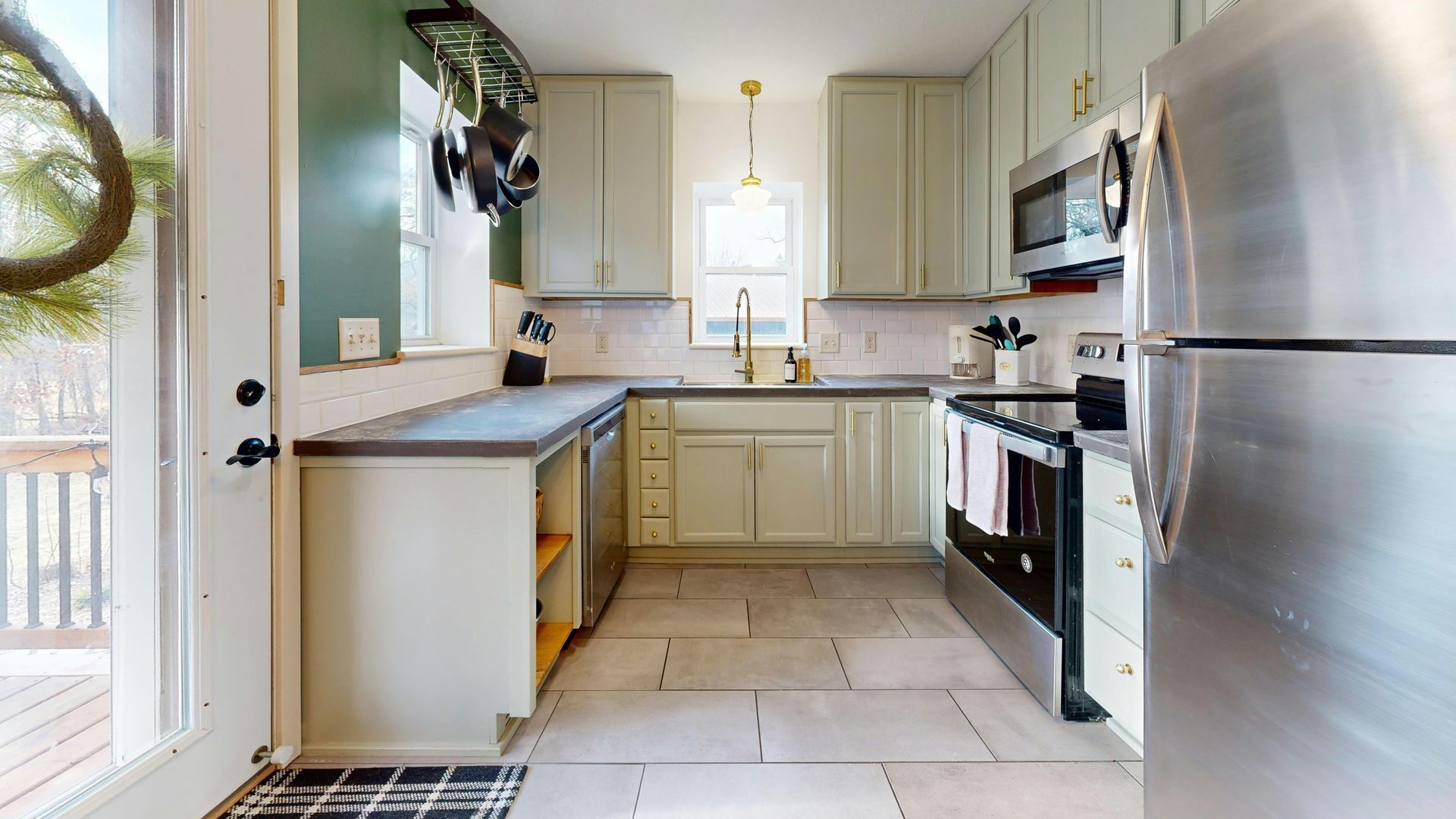
The twelve-to-eighteen-inch band of wall directly above and behind a range experiences conditions dramatically more severe than the rest of the kitchen. This zone absorbs radiant heat from burners and oven vents, catches direct grease splatter from pan-frying, and endures steam that condenses and runs downward carrying dissolved grease and food residue. For homes without a tile backsplash behind the stove — surprisingly common in older DFW homes and builder-grade kitchens throughout Collin County — the paint system needs to function almost as a washable surface material. We recommend a dedicated high-adhesion primer followed by two full coats of semi-gloss alkyd-modified acrylic in this area, creating a system dense and hard enough to withstand weekly degreasing without softening, dulling, or losing adhesion. The primer matters particularly here because repeated thermal cycling — heating during cooking, cooling afterward — creates expansion stress that will delaminate finish coats applied over inadequate primer within a year or two.
Sink and Dishwasher Zones: Where Water Wins the Long Game
The areas immediately flanking your kitchen sink and adjacent to your dishwasher face a different primary adversary — persistent water exposure attacking paint through moisture cycling fatigue. Every splash, every cloud of steam from draining pasta, every burst of humidity when the dishwasher door opens mid-cycle subjects the paint film to rapid moisture absorption followed by evaporative drying that incrementally weakens the binder network. Over months of daily exposure, this cycling creates microscopic failures that eventually manifest as peeling, bubbling, or chalky deterioration. Mildew represents an additional threat in sink zones, as persistent dampness combined with organic food residue creates ideal colonization conditions, particularly in caulk lines where countertops meet walls. Paint products containing built-in mildewcide additives provide meaningful protection, and using your range hood during cooking and dishwashing dramatically reduces the moisture load your kitchen paint must manage. Homeowners often overlook the wall area below the countertop edge near the sink, but this hidden zone catches dripping water and spray runoff that pools unnoticed, making it one of the most common locations for early paint failure in DFW kitchens.
Surface Preparation Matters More in Kitchens Than Anywhere Else
Even the best kitchen-rated paint will fail prematurely if applied over improperly prepared surfaces, and kitchen prep requirements exceed standard interior painting significantly. Existing grease contamination must be completely removed — not merely wiped down but chemically degreased using TSP or a comparable agent that breaks the molecular bond between oxidized cooking oils and the existing paint surface. Painting over residual grease creates a release layer between coats that will cause your new paint to delaminate in sheets, a failure pattern we see regularly in DFW homes where previous painters cut corners on kitchen prep. Sanding after degreasing creates mechanical tooth for the new coating to grip, especially critical on the smooth, grease-polished surfaces that develop around stoves over years of cooking. Any areas where existing paint has softened or lost adhesion need to be scraped to stable material and primed with a high-adhesion product before finish coats, because covering compromised paint simply transfers the failure point upward into your new coating.
Maintaining Your Kitchen Paint Investment Between Repaints
How you care for your kitchen walls after painting significantly extends the interval between repaints. Wiping the wall behind your stove with a damp cloth after heavy cooking — before grease oxidizes and bonds to the paint film — removes contamination while it's still easy to lift rather than waiting until it becomes permanent. Using your range hood exhaust fan during every cooking session, not just when something is smoking, removes airborne grease and moisture before they settle on wall surfaces. Addressing water splashes around the sink promptly rather than allowing them to air-dry prevents mineral deposit buildup and reduces the cumulative moisture cycling that fatigues paint films.
Your Kitchen Deserves a Paint System That Works as Hard as You Do
Kitchen painting isn't just about choosing a color that complements your cabinets and countertops — it's about engineering a coating system tailored to the specific thermal, chemical, and moisture demands each zone of your kitchen generates daily. The right product selection, targeted sheen strategy, and thorough surface preparation create a kitchen finish that cleans easily, resists yellowing and grease absorption, and maintains its appearance through years of real family cooking rather than failing within months.
When you're ready to give your kitchen walls the professional treatment they deserve, Hutch'N'Son Painting brings over forty years of hands-on experience solving the exact challenges DFW kitchens create — from grease-battered stove walls in Plano ranch homes to steam-damaged sink zones in Frisco's newer construction. We select products and application strategies matched to your kitchen's specific conditions, because we know that getting the details right upfront saves you money, frustration, and the hassle of premature repainting down the road. Contact Hutch'N'Son Painting today to schedule your free estimate and let our team show you why homeowners across Richardson, Allen, McKinney, and the greater Dallas-Fort Worth area have trusted us since 1985 to deliver results that last.