Popcorn Ceiling Solutions: Remove, Cover, or Paint?

Popcorn ceilings remain a prominent feature in countless Dallas-Fort Worth homes built between the 1960s and 1990s, creating textured surfaces that once represented modern acoustic solutions and cost-effective finishes but now often feel dated and undesirable to homeowners pursuing contemporary aesthetics. While interior painting projects typically focus on walls, trim, and cabinets, ceiling treatments profoundly affect room appearance and perceived height, making popcorn ceiling decisions among the most impactful choices Dallas homeowners face during renovation projects. The frustration North Texas homeowners experience when trying to update popcorn ceilings stems from conflicting information about removal costs and health risks, confusion about whether covering or painting provides adequate alternatives, and uncertainty about which approach best suits their specific situations considering budget constraints, timeline requirements, and the age of their homes. Understanding the fundamental differences between removal that eliminates texture permanently, encapsulation systems that cover while preserving underlying texture, and painting that refreshes appearance without changing texture empowers Plano, Frisco, and McKinney homeowners to make informed decisions aligned with their renovation goals, budgets, and tolerance for disruption while avoiding the costly mistakes that result from choosing inappropriate solutions for their specific circumstances and home conditions.
The Asbestos Reality in Dallas Homes
The most critical factor determining appropriate popcorn ceiling treatment involves asbestos presence, with homes built before 1978 potentially containing asbestos fibers in ceiling texture that create serious health hazards if disturbed through removal or aggressive preparation. Federal regulations banned asbestos in ceiling texture during the late 1970s, though existing inventories remained in use through the early 1980s, meaning Dallas homes built before 1980 require asbestos testing before any ceiling work proceeds. Professional asbestos testing costs between three hundred and five hundred dollars for comprehensive sampling but provides essential information determining whether removal requires expensive hazardous material abatement or whether simpler approaches can proceed safely.
Asbestos-containing popcorn ceilings remain safe when left undisturbed and maintained in good condition, meaning homeowners can safely live with these ceilings indefinitely without health risks. However, any work disturbing these ceilings including scraping for removal, aggressive sanding for painting preparation, or demolition for remodeling releases asbestos fibers that pose serious respiratory hazards requiring professional abatement. Licensed asbestos abatement contractors must perform removal following strict containment and disposal protocols that typically cost three to seven dollars per square foot compared to one to three dollars per square foot for non-asbestos removal, making asbestos presence a major cost factor in ceiling treatment decisions.
Encapsulation represents the safest approach for asbestos-containing popcorn ceilings, avoiding disturbance that releases fibers while creating smooth modern appearances. Installing drywall over existing popcorn texture or applying skim coat systems that cover without disturbing underlying material allows Dallas homeowners to achieve contemporary aesthetics without expensive asbestos abatement. Many homeowners find encapsulation costs competitive with professional asbestos removal while delivering superior results through completely smooth surfaces impossible to achieve through removal alone.
Popcorn Ceiling Removal: Process and Costs
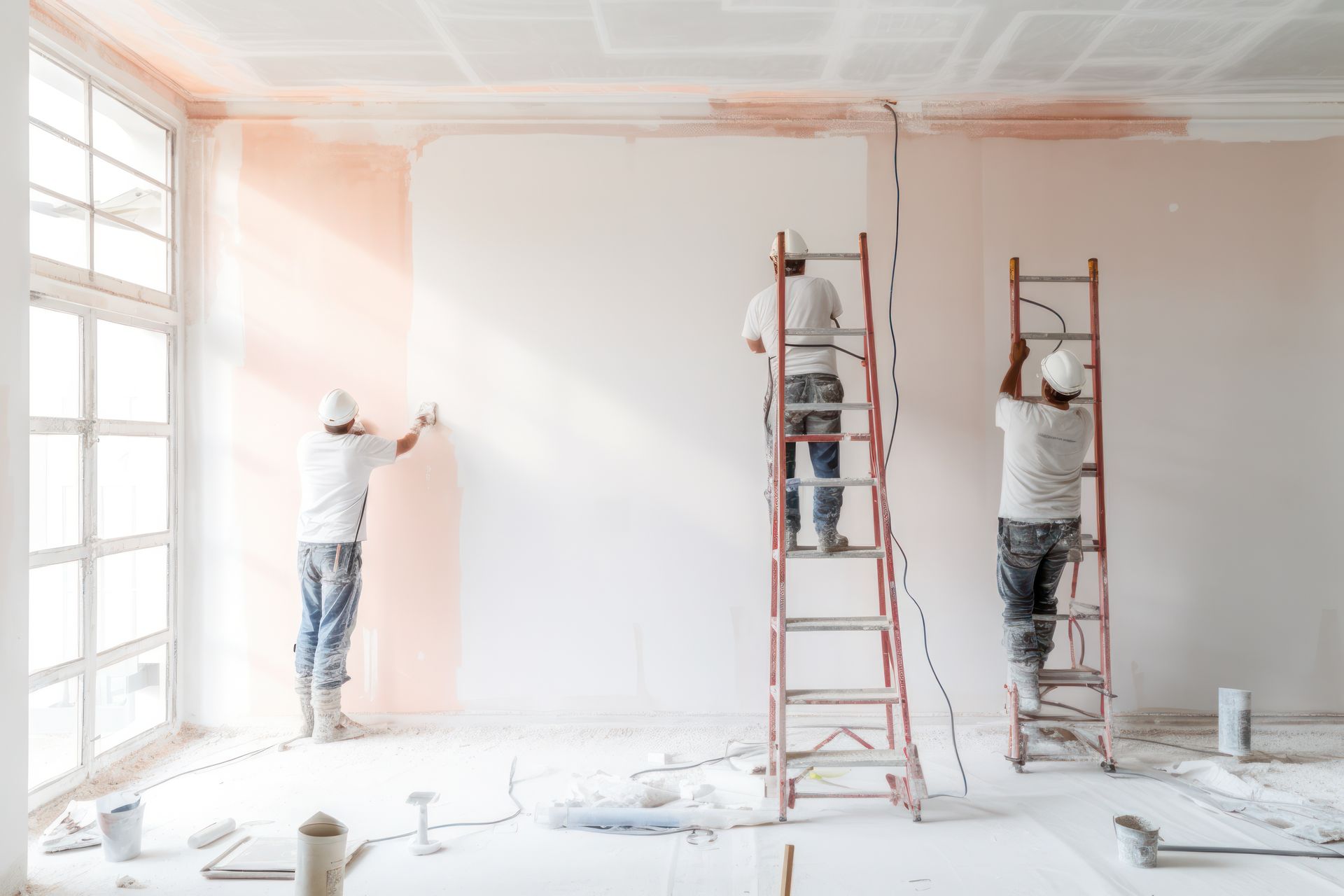
Complete popcorn ceiling removal delivers the most permanent solution, eliminating texture entirely and creating smooth surfaces that maximize ceiling height and modern appearance. The removal process involves protecting floors and walls with plastic sheeting, misting ceilings with water to soften texture and minimize dust, then scraping texture using wide drywall knives that remove material down to underlying drywall. Following removal, contractors skim coat or apply joint compound to repair scraping damage and imperfections in base drywall, sand smooth, prime, and paint, creating finished ceilings indistinguishable from new construction.
Removal costs for non-asbestos popcorn ceilings in Dallas typically range from one to three dollars per square foot including scraping, repair, priming, and painting, with variation depending on ceiling height, room configuration complexity, and texture adhesion difficulty. A typical Dallas home with two thousand square feet of ceiling space faces removal costs between two thousand and six thousand dollars depending on project specifics and contractor rates. Additional costs may include furniture moving, flooring protection, and addressing any unexpected damage discovered after texture removal including water stains, poor drywall joints, or structural issues previously hidden by texture.
The mess generated during popcorn removal ranks among the process's most significant drawbacks, with fine texture dust infiltrating rooms despite plastic containment and requiring extensive cleanup extending beyond immediate work areas. Even professional contractors struggle to completely contain removal dust that finds its way into HVAC systems, light fixtures, and adjacent rooms, creating cleanup obligations lasting days after work completion. Dallas homeowners should anticipate living with construction disruption including furniture displacement, limited room access, and dust issues for at least a week during professional removal projects.
Timeline considerations for removal typically span five to ten business days for average homes, including prep work, scraping, repair, drying time between skim coat applications, sanding, priming, and final painting. Faster timelines risk rushed work that leaves visible imperfections, while extended timelines increase household disruption and inconvenience. Homeowners planning removal should prepare for temporary displacement from affected areas and understand that ceiling work affects entire homes due to dust generation and access requirements.
Covering Options: Drywall Overlay and Skim Coating
Installing new drywall directly over popcorn ceilings represents the cleanest approach to achieving smooth modern surfaces without scraping existing texture. This method involves attaching thin drywall sheets measuring one-quarter or three-eighths inch thick to ceiling joists through existing popcorn texture, creating completely smooth surfaces while avoiding texture removal entirely. The approach works particularly well for asbestos ceilings where encapsulation provides safer and often more economical alternatives to professional abatement and removal.
Drywall overlay costs typically range from two to four dollars per square foot installed including materials, labor, taping, joint compound application, sanding, priming, and painting. While slightly more expensive than basic removal for non-asbestos ceilings, overlay delivers superior results through perfectly smooth surfaces that removal cannot match when base ceilings show imperfections. The method also generates minimal mess compared to scraping, allowing homeowners to remain in their homes during work with only moderate disruption from drywall installation activities.
The primary drawback of drywall overlay involves reduced ceiling height, with the additional drywall layer lowering ceilings by approximately one-half inch to three-quarters inch including drywall thickness and compound application. Most Dallas homes featuring eight-foot or higher ceilings accommodate this reduction without significant impact, though homes with already low ceilings may find the reduction makes rooms feel more confined. Crown molding installation can minimize this visual effect by creating transition detail that disguises lowered ceiling planes.
Skim coating provides another covering alternative involving applying thin layers of joint compound directly over popcorn texture to create smooth surfaces without removing texture or adding drywall. This technique requires significant skill, with experienced drywall finishers applying compound that fills texture valleys while building smooth surfaces requiring minimal sanding. Skim coating costs typically range from one fifty to three dollars per square foot, positioning it between removal and drywall overlay in price while offering the thinness advantage of minimal ceiling height reduction.
Skim coat quality varies dramatically based on applicator skill and compound application thickness, with inexperienced contractors often creating wavy or uneven surfaces showing texture telegraphing through thin application areas. Successful skim coating requires multiple applications with proper drying time between coats, adding several days to project timelines. Dallas homeowners considering skim coating should verify contractor experience with this specialized technique and view completed examples before committing to this approach.
Painting Popcorn Ceilings: When and How
Painting represents the least expensive and least disruptive popcorn ceiling solution, refreshing appearance without changing texture or requiring major preparation and construction work. This approach makes sense for Dallas homeowners comfortable with textured ceilings who simply want updated color, those working within tight budgets precluding removal or covering, or those in homes where ceiling height limitations make overlay undesirable. Painting also works well as interim solution for homeowners planning eventual removal but needing immediate appearance improvement.
Popcorn ceiling painting costs typically range from fifty cents to one dollar fifty per square foot for professional application including minor repairs, primer, and two finish coats. A two-thousand-square-foot ceiling thus costs one thousand to three thousand dollars to paint professionally, representing roughly one-third to one-half the cost of removal and significantly less than drywall overlay. DIY painting reduces costs further but requires proper equipment including extension poles, quality rollers designed for textured surfaces, and patience for working overhead on tiring applications.
Surface preparation for popcorn painting involves repairing any damaged or loose texture through misting and reapplying texture compound, cleaning to remove dust and cobwebs that prevent paint adhesion, and priming if ceilings show staining from water damage, smoke, or previous paint that may bleed through fresh coats. Stain-blocking primers prove essential for water-stained ceilings common in Dallas homes where roof leaks or plumbing failures have caused discoloration, with oil-based primers providing superior stain blocking compared to water-based alternatives despite odor and cleanup challenges.
Application techniques for popcorn ceilings differ from smooth surface painting due to texture depth that absorbs paint heavily while resisting uniform coverage. Use thick-nap rollers measuring three-quarters inch or deeper that penetrate texture valleys, loading rollers fully with paint to compensate for high absorption. Roll in multiple directions including cross-rolling to ensure complete coverage reaching all texture surfaces, accepting that popcorn requires significantly more paint per square foot than smooth ceilings. Spraying provides superior coverage for deeply textured ceilings but requires extensive masking protecting walls, floors, and furnishings from overspray.
Color selection affects popcorn ceiling appearance dramatically, with bright whites making texture more prominent through shadow definition while warmer off-whites or light creams soften texture appearance through reduced contrast. Many Dallas homeowners find that slightly tinted ceiling colors rather than pure whites create more attractive results on textured surfaces, though personal preferences vary widely. Consider testing small areas with sample colors before committing to full rooms, observing how different shades interact with texture under both natural and artificial lighting.
Decision Framework: Choosing Your Best Option
Creating systematic decision frameworks helps Dallas homeowners evaluate options objectively based on their specific situations rather than making emotional choices influenced by design trends without considering practical realities. Budget represents the primary constraint for most homeowners, with painting requiring the smallest investment but delivering the least dramatic change, removal or skim coating requiring moderate investment with significant appearance improvement, and drywall overlay typically costing most while delivering the smoothest results with least mess for asbestos situations.
Home age and asbestos testing results dramatically affect appropriate solutions, with pre-1980 Dallas homes potentially requiring expensive professional abatement that makes encapsulation approaches more economical and practical. Homes testing positive for asbestos should generally pursue covering options that avoid disturbance, while homes built after 1980 or testing negative have full flexibility in choosing among removal, covering, or painting based on other factors.
Ceiling height influences covering decisions, with homes featuring standard eight-foot ceilings accommodating drywall overlay without significant impact while homes with seven-foot or lower ceilings should carefully consider whether additional height reduction creates claustrophobic feelings. Removal maintains maximum ceiling height while covering options reduce height by amounts ranging from minimal for skim coating to approximately three-quarters inch for drywall overlay.
Personal tolerance for construction disruption affects appropriate choices, with removal creating the most extensive mess and longest timelines, drywall overlay generating moderate disruption from installation work but minimal dust compared to removal, and painting causing least disruption allowing rooms to remain functional throughout projects. Dallas homeowners with young children, home-based businesses, or limited alternative living arrangements may find disruption considerations decisive in choosing less invasive solutions.
Long-term occupancy plans influence investment appropriateness, with homeowners planning extended residence justifying larger investments in removal or covering that deliver permanent solutions, while those anticipating relocation within several years may find painting provides adequate improvement at lower cost. Resale considerations also matter, with contemporary buyers often preferring smooth ceilings that may justify removal or covering investments for homes entering competitive markets.
Existing ceiling condition affects repair requirements before painting or covering, with damaged or water-stained ceilings requiring more extensive preparation that increases costs regardless of chosen approach. Severely damaged ceilings showing large areas of loose or falling texture may require removal or overlay regardless of homeowner preferences simply because repair costs approach removal costs while delivering inferior results.
Dallas-Specific Considerations
Dallas housing stock characteristics influence popcorn ceiling decisions through the prevalence of specific architectural styles and construction periods. Homes from the 1970s and 1980s represent the peak popcorn ceiling era in North Texas, with these properties most likely to require asbestos testing and potentially face higher removal costs. Newer construction from the 1990s generally used non-asbestos texture, simplifying removal decisions while still potentially showing heavy texture requiring consideration of whether painting, removal, or covering best achieves desired results.
The competitive Dallas real estate market rewards contemporary finishes including smooth ceilings that appeal to buyers accustomed to seeing smooth surfaces in new construction. Homes with popcorn ceilings often face market resistance or price reductions, making ceiling treatment worthwhile investments for sellers preparing properties for competitive markets. However, the appropriate treatment level depends on home price point and target buyer demographics, with modest homes potentially seeing adequate return from painting while luxury properties require complete removal or overlay.
Climate control considerations affect project timing and execution, with Dallas's hot summers making ceiling work uncomfortable despite being indoors when temperatures and humidity levels rise during afternoon hours. Spring and fall provide optimal conditions for ceiling projects, with moderate temperatures making overhead work less taxing while allowing proper paint drying and curing. Winter work remains feasible though heating costs increase when maintaining proper temperatures for compound drying and paint curing while homes remain partially open for ventilation.
Deciding between popcorn ceiling removal, covering, or painting requires understanding how your specific situation including home age, budget, timeline requirements, and renovation goals aligns with each approach's advantages and limitations. Hutch'N'Son Painting has guided Dallas-Fort Worth homeowners through popcorn ceiling decisions since 1985, providing honest assessments of whether painting provides adequate solutions or whether removal or covering better serves long-term satisfaction. Our experience spans all approaches from professional painting that refreshes appearance cost-effectively to coordinating complete removal projects or executing drywall overlay systems that deliver smooth modern ceilings. We begin with thorough evaluation including discussing asbestos testing needs for older homes, explaining realistic outcomes and costs for each approach, and recommending solutions matching your specific circumstances rather than promoting any single method. Whatever direction you choose, our skilled team executes with the attention to detail and quality workmanship that protect your investment while transforming your home's interior spaces. Reach out to Hutch'N'Son Painting today for a consultation that helps you navigate popcorn ceiling options and discover which solution delivers the results you envision within your budget and timeline.